
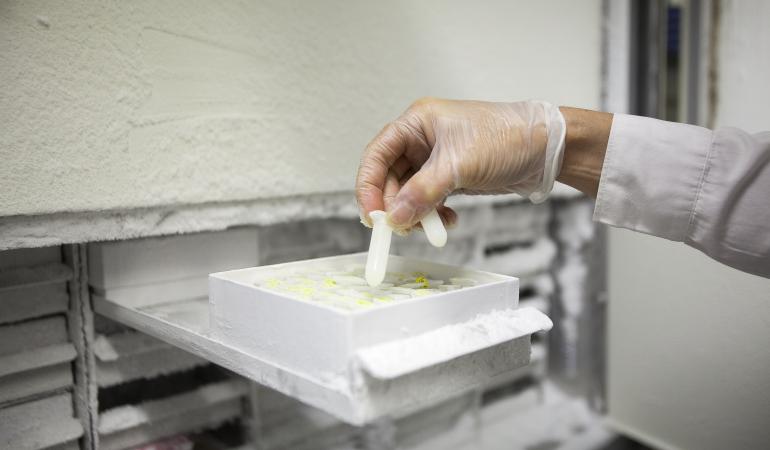
During a routine check, it is noticed that the digital inventory system lists twelve Eppendorf tubes of H5N1 Influenza in the -80°C freezer, while only ten tubes are physically present. There is no indication of theft or misuse, but what are the risks and how do you determine what happened to the missing tubes?
Risks and perspective for action
Even when there are no signs of theft or misuse, it is important to investigate what happened to the missing tubes in order to ensure safety and minimize risks. The material may have been disposed of (possibly in an unsafe manner), mixed up by accident, deliberately removed, or recordkeeping may be inaccurate. Such situations can lead to staff being exposed to unexpected biological risks, the spread of H5N1 into the environment, or even intentional release by malicious actors. Therefore, it is important to systematically investigate what has happened.
First, check whether a name is registered with the missing tubes in the digital system and contact the person responsible for those tubes. There may have been an error when updating the records in the digital inventory system.
If no mistake is found in the registration system, further investigation should be carried out, for example by the Biorisk Management Advisor (BMA) in collaboration with laboratory staff and security personnel. Access logs for the storage area can be checked to see which personnel have entered the area since the last inspection. Laboratory staff who have recently worked with H5N1, as well as others with access to the freezer, can be interviewed to verify material transfer and review lab notes. Access to the freezer can be temporarily restricted until the issue is resolved.
If discrepancies are found and the missing tubes can be accounted for, then there is no security incident. However, the discrepancy reveals weaknesses in the accountability process. This should be documented, and the lab may consider implementing additional measures to improve material accountability. These may include refresher training on documentation standards, adjustments to the digital inventory system to simplify recordkeeping, a two-person check for inventory changes, or a short announcement to the entire team about the importance of accurate recordkeeping.
If no discrepancies are found and the missing tubes cannot be accounted for, a potential biosecurity incident must be considered. It is important that the incident is properly documented and that management is informed. If genetically modified organisms (GMOs) are involved, this must be reported to the ILT (Netherlands Human Environment and Transport Inspectorate). The lab may take measures to improve biosecurity, such as requiring two-person access for the lab with the relevant freezer containing high-risk material, providing training to increase biosecurity awareness, and/or increasing physical security.
Sharing Your Scenario?
If you would like to discuss how to handle this scenario with the Biosecurity Office or if you have encountered a biosecurity scenario that you would like to share with colleagues in the field, please feel free to contact us. The Biosecurity Office can be reached at biosecurity@rivm.nl.